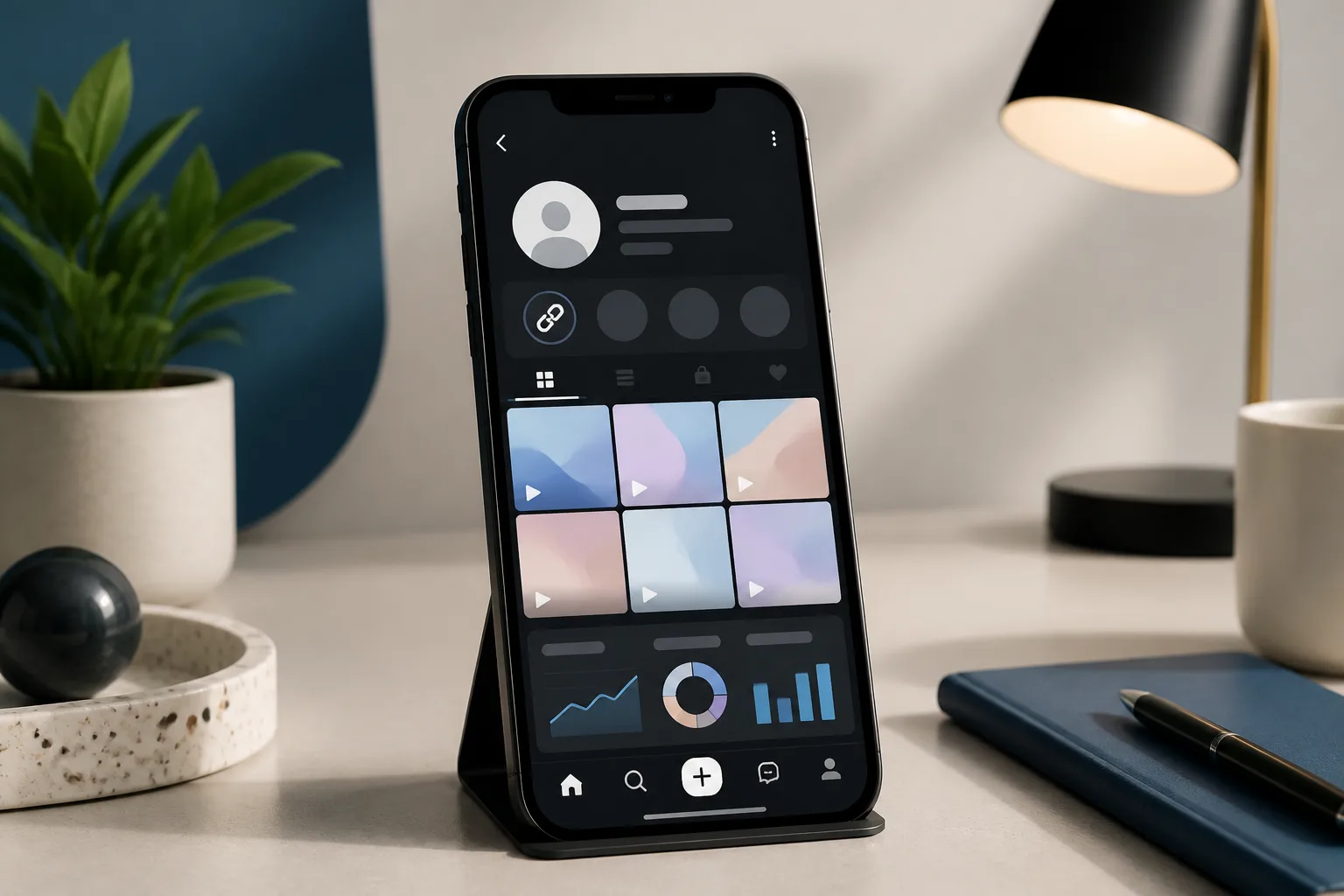

TikTok marketing for small businesses combines short-form videos, paid promotions, creator partnerships, and TikTok Shop to build awareness, support sales, and engage a community. TikTok Marketing for Small Business: A Practical Starter Plan recommends assessing audience fit and production capacity, then testing content and reviewing results. TikTok’s listed ad formats include In-Feed, Spark, Branded Effects, and Live Shopping.
Quick stats
- TikTok’s short-form videos and editing tools can be used to build brand awareness, increase sales, and nurture a community.
- TikTok Shop lets sellers tag products in videos and livestreams so viewers can view details and check out in-app.
- TikTok usernames have a 24-character limit.
- A short TikTok video can take hours to make, including shooting, reshooting, editing, adding text, and posting.
- One source recommends starting TikTok ads with a $50 budget and says it can be expanded toward $500 when results and conversions improve.
What does TikTok Marketing for Small Business: A Practical Starter Plan include?
TikTok marketing uses short-form videos and the platform’s tools to build brand awareness, increase sales, and nurture a community. For a small business, TikTok Marketing for Small Business: A Practical Starter Plan can cover organic videos, paid ads, creator partnerships, and TikTok Shop. These approaches differ in how they reach people and support a purchase.
| Approach | How it works |
|---|---|
| Organic videos | Content reaches viewers without paid promotion; distribution is driven by the algorithm. |
| Paid ads | Promotions can appear in users’ feeds or other placements. |
| Creator partnerships | A business pays a niche-specific influencer to make sponsored content endorsing a product. |
| TikTok Shop | Sellers tag products in videos or livestreams so viewers can see details and check out in-app. |
TikTok Marketing for Small Business: A Practical Starter Plan also distinguishes ad formats: the listed formats include In-Feed, Spark, Branded Effects, and Live Shopping. Spark Ads amplify existing organic videos from a business or partner creator with permission, while Live Shopping involves selling during a livestream. Keep the Social Growth Desk framing on social media and influencer marketing. TikTok Marketing for Small Business: A Practical Starter Plan is about connecting social attention with community and potential sales, not treating every format as interchangeable.
How can a small business decide whether TikTok is a suitable marketing channel?
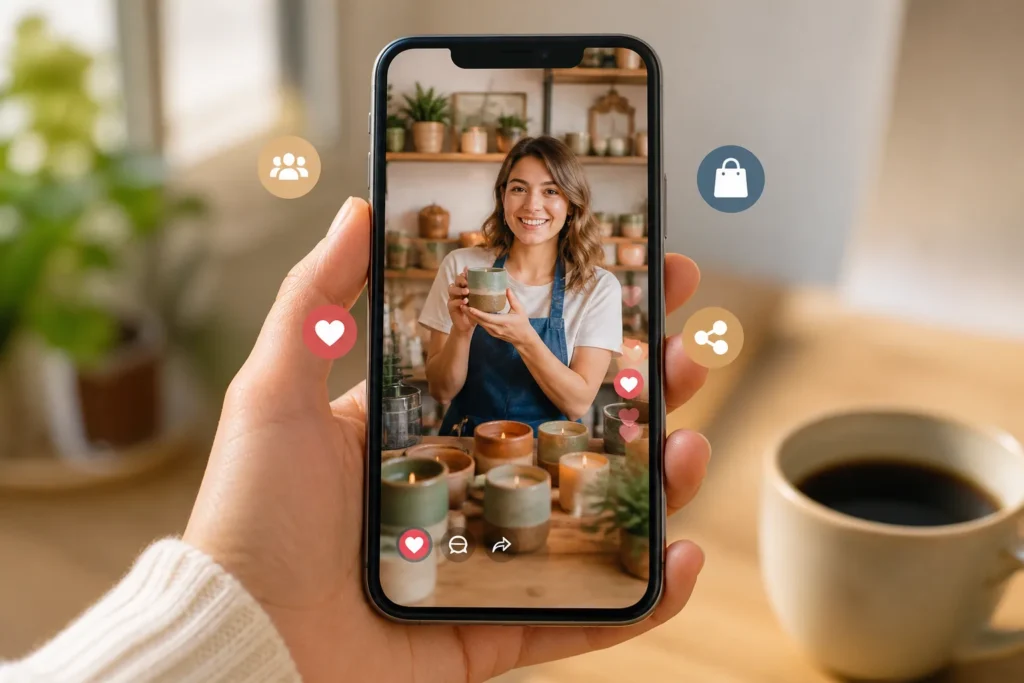
TikTok’s suitability depends on whether your target audience is active there, whether it cares about what you sell, and whether you can produce videos regularly. TikTok Marketing for Small Business: A Practical Starter Plan should begin with those checks, rather than assuming the platform fits every company.
One source describes TikTok as Gen Z-driven and reports that over half of Gen Z is on the platform, compared with 36% of millennials. Treat that as one source’s audience context, not a guarantee about your own customers. Ask whether existing customers use TikTok, then consider which of your products or services might interest people there.
Production capacity matters too. A short video can take hours to shoot, reshoot, edit, add text to, and publish, and one source cautions against opening an account without people who can create content continually. TikTok Marketing for Small Business: A Practical Starter Plan is most useful when you can match product fit and audience fit with a realistic production schedule. Review those three criteria before committing to a content strategy, and revisit them if making videos becomes difficult to sustain.
How do you set up a TikTok Business Account and configure the profile?
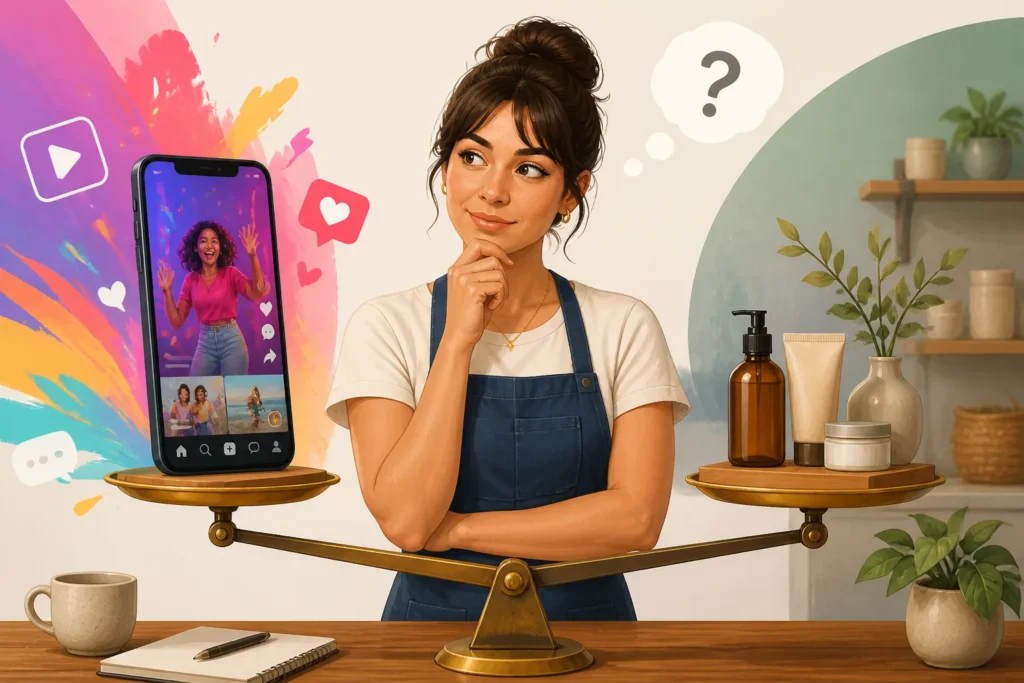
A TikTok Business Account provides access to analytics and ad tools, so it can support both content review and promotion. TikTok Marketing for Small Business: A Practical Starter Plan starts with a recognizable business identity and a profile that makes the offer clear.
Use a business name that matches the brand, and plan a username within TikTok’s 24-character limit. Use the bio to explain what the business does and who it serves; the cited guidance says the bio has characters. A Business Account profile can include a clickable website link.
Check setup details before completing the account. The cited source says Business Accounts can be created only in regions where self-service advertisers are supported, and the selected business time zone can’t be changed later. Business profiles may also have limited music selections. TikTok Marketing for Small Business: A Practical Starter Plan should therefore treat region, time zone, profile details, and music availability as setup checks—not assume every setting can be changed later.
Browse top TikTok marketing creators
How should a small business plan its first month of TikTok content?
A first-month content plan should pair a calendar of video ideas with a posting schedule and a mix of behind-the-scenes, educational, trend-based, and product-focused posts. TikTok Marketing for Small Business: A Practical Starter Plan can use a manageable rhythm: one source suggests two to three posting days a week, while another favors a sustainable weekly cadence over bursts followed by inactivity.
Choose repeatable formats: show yourself packing orders, answer a customer question with a video reply, explain a product, or share behind-the-scenes footage. Trending sounds, effects, and hashtags can help a brand join trending conversations organically.
Build a weekly workflow around a brief that states the audience, question, explanation, visuals, and next action. Batch a week’s content in one block of time, then keep approved footage and versions organized. Film vertically and give each video a clear opening hook. There’s no single video length that fits every message. TikTok Marketing for Small Business: A Practical Starter Plan should make consistency practical, not dictate a universal length or daily quota.
How much does TikTok marketing cost for a small business?
An organic start can use a smartphone and free editing tools instead of professional video equipment; one source describes an organic budget of zero, while another notes that organic growth still costs time and imagination. TikTok Marketing for Small Business: A Practical Starter Plan can begin without ad spend, but not without staff time.
Paid-ad prices vary across the cited sources, so treat them as reported examples rather than guaranteed rates. One recommends testing with $50 and expanding toward $500 if results and conversions improve. Another lists $1.82 CPM, $0.010 per view, and $0.19 per click. A separate source gives a $10–$20 CPM range and $0.10–$0.50 per click.
Start modestly and increase spending only on ad types that perform best. The available claims provide no influencer rate ranges, TikTok Shop fees, or pixel costs. TikTok Marketing for Small Business: A Practical Starter Plan should use these figures as planning examples, not promises about what a campaign will cost. TikTok Marketing for Small Business: A Practical Starter Plan can test organic content first, then use a limited paid budget to assess results.
Get TikTok marketing done for you
What are TikTok Shop’s follower and account eligibility requirements?
TikTok Shop lets sellers tag products in videos and livestreams so viewers can view product details and check out in the app. TikTok Marketing for Small Business: A Practical Starter Plan can explain that shopping function, but the available claims don’t specify a follower minimum or complete account eligibility requirements.
That means the evidence here doesn’t establish whether a particular follower threshold applies, or which account conditions a seller must meet. Don’t treat a 1,000-follower figure as confirmed, and don’t assume these incomplete details describe current eligibility. Check the requirements that apply to your account before planning around Shop access; this article can’t verify them from the available claims.
For planning purposes, separate the known product-tagging feature from the unknown access criteria. TikTok marketing for Small Business: A Practical Starter Plan can include Shop as a potential in-app sales route while making clear that eligibility remains unresolved here. TikTok Marketing for Small Business: A Practical Starter Plan shouldn’t promise that any small business can open or use a Shop based on follower count alone.
What risks and trade-offs should a small business consider before marketing on TikTok?
TikTok’s algorithm can distribute videos to people beyond an account’s existing audience, but organic reach isn’t guaranteed. TikTok Marketing for Small Business: A Practical Starter Plan should account for that uncertainty rather than treating viral reach as a reliable outcome.
Small accounts can sometimes find wider success when videos earn high engagement early, but production takes time: a short video can take hours to make. Pressure to post every day can contribute to burnout. Choose a sustainable schedule over short bursts of heavy posting followed by inactivity, and don’t replace useful content just to meet an arbitrary daily quota.
Paid creative can tire out, too: an ad that performs strongly for a week may perform poorly the next because of fatigue. Monitor results and refresh or test creative when performance changes. The available claims don’t establish an ad-saturation rate, so saturation shouldn’t be presented as a measured fact here. TikTok Marketing for Small Business: A Practical Starter Plan should help you weigh reach against the labor it takes to keep producing. TikTok Marketing for Small Business: A Practical Starter Plan works best as a sustainable test, not a promise of constant growth.
Which TikTok analytics should a small business track to improve results?
Separate content performance from campaign performance, then review the metrics that show whether viewers engage and take a next step. TikTok Marketing for Small Business: A Practical Starter Plan can use watch time, shares, comments, and likes to assess videos, alongside profile-link clicks as a signal that viewers may be moving toward becoming customers.
For ads, track impressions, clicks, CTR, views, and video engagement. CTR is the percentage of people who click after seeing content or an ad, calculated as clicks divided by impressions. Conversion rate is the percentage of visitors or viewers who purchase, calculated as orders divided by clicks or views. CPA is the average cost to acquire one paying customer or order, calculated as total spend divided by conversions.
Use a repeat, revise, or stop loop: test variations, review content behavior and financial contribution, then keep what produces useful results and retire what doesn’t. The available claims don’t establish TikTok pixel setup or a specific ROI formula. TikTok Marketing for Small Business: A Practical Starter Plan should rely on reported metrics without presenting unverified tracking steps. TikTok Marketing for Small Business: A Practical Starter Plan can guide the next test based on what the evidence shows.
| Source | Micro-influencer follower range |
|---|---|
| viral.new | 10,000–50,000 followers |
| nogood.io | 10,000 to 100,000 followers |
| kixmon.com | typically 10,000-to-100,000-follower audience |
| Approach | How it works |
|---|---|
| Organic videos | Unpaid distribution driven by the algorithm |
| Paid ads | Paid promotions that can appear in feeds or other placements |
| Creator partnerships | Sponsored content created by a niche-specific influencer |
| TikTok Shop | Product tags let viewers view details and check out in-app |
You asked, we answer
How do I make a TikTok for business?
To make a TikTok for business, set up a Business Account, choose a recognizable business name and username, and write a bio explaining what you do and who you serve. A Business Account also enables analytics, ad tools, and a clickable website link on the profile.
Why is TikTok 90% ads now?
The available claims don’t establish that TikTok is 90% ads or explain a percentage of advertising on the platform. They describe ads as paid promotions that can appear in feeds or other placements.
Do you need followers to open a TikTok Shop?
The available claims don’t specify a follower minimum or provide complete Shop account eligibility requirements. They describe TikTok Shop’s product-tagging and in-app checkout function, but not a 1,000-follower threshold.
Is TikTok good for small business owners?
TikTok may suit a small business if its customers use the platform, its products or services interest that audience, and it can make videos consistently. The fit depends on the business and its target audience, so it isn’t automatic.
Your playbook
- Check whether your existing customers use TikTok and which products or services they might care about before choosing the platform.
- Start with a sustainable posting rhythm; one source suggests two to three days weekly, while another recommends consistency over bursts.
- Use a modest paid-ad test and increase spending only on better-performing ad types.
- Review content and campaign performance separately, then use testing results to decide what to repeat, revise, or stop.
