How to Build an Email Sequence That Sells Without Feeling Pushy means using automated, stage-based messages with one helpful next step rather than repeated promotions. For Social Growth Desk audiences, a sequence may contain three to seven emails, with segmentation, useful follow-ups, clear stopping rules, and measurement across clicks, replies, conversions, and pipeline outcomes.
- A simple product might convert in three to five emails, while complex purchases may need a longer nurture sequence.
- Most sequences perform well with three to seven emails.
- Each email should have a single call to action.
- The source reports a 26% higher response rate for personalized follow-ups.
- The source reports a 0.3% click rate for the sequences described.
How to Build an Email Sequence That Sells Without Feeling Pushy
An automated email sequence is a set of pre-written messages sent after a timing rule or subscriber action triggers them. A sales-funnel email targets a prospect’s buying stage and aims to nurture that prospect toward purchase. For Social Growth Desk, that could mean helping a creator, e-commerce brand, agency, or online seller turn social-media attention into a lead conversation.
How to Build an Email Sequence That Sells Without Feeling Pushy starts with progression, not a promotional blast. A sequence has selected intervals and a defined goal, while a cold email may primarily aim to start a conversation rather than close a deal. How to Build an Email Sequence That Sells Without Feeling Pushy also means letting each message respond to the prospect’s stage or action. How to Build an Email Sequence That Sells Without Feeling Pushy doesn’t require pretending that every recipient is ready to buy.
The ledger doesn’t provide a specific CRM-integration or landing-page process, including how to connect lead magnets, landing pages, or social lead capture. Treat those implementation details as unknown rather than filling them in by assumption.


How many emails should a sales sequence contain, and how much time should pass between messages?
Sales-sequence length depends on the offer and buying process: a simple product might convert in three to five emails, while a complex purchase may need a longer nurture sequence. Most sequences perform well with three to seven emails, and one source recommends spacing many B2B messages two to four days apart.
How to Build an Email Sequence That Sells Without Feeling Pushy can use a prompt first follow-up and wider later gaps. One recommendation places the initial follow-up within hours, then spaces subsequent emails to avoid overwhelming recipients. Another recommends three-to-five-day gaps early and seven days or longer for later steps, with some later gaps extending to 7–14 days. How to Build an Email Sequence That Sells Without Feeling Pushy should therefore treat timing as a testable plan, not a fixed rule. How to Build an Email Sequence That Sells Without Feeling Pushy must also include a stop rule: end the sequence when the recipient replies, books a meeting, or opts out.
Which types of emails should appear at each stage of a prospect’s buying journey?
The sales funnel has six stages: awareness, interest, consideration, intent, evaluation, and conversion. Plan each message to educate, nurture, or convert as the prospect moves from awareness toward a decision. For a social-media marketing audience, an early message might clarify a problem facing a creator or online seller; a later message can address evaluation or conversion.
How to Build an Email Sequence That Sells Without Feeling Pushy should raise the problem, explore the cost of leaving it unresolved, and then introduce a possible solution if the prospect is open to it. Early messages should emphasize value and trust before later messages introduce urgency or a direct offer. How to Build an Email Sequence That Sells Without Feeling Pushy also requires each follow-up to add something: a proof point or outcome in one step, then a different angle, customer result, risk perspective, or simplified offer in another. How to Build an Email Sequence That Sells Without Feeling Pushy avoids repeating the opener by giving every follow-up a new reason to reply.

How should you segment and personalize messages so each email is relevant to its recipient?
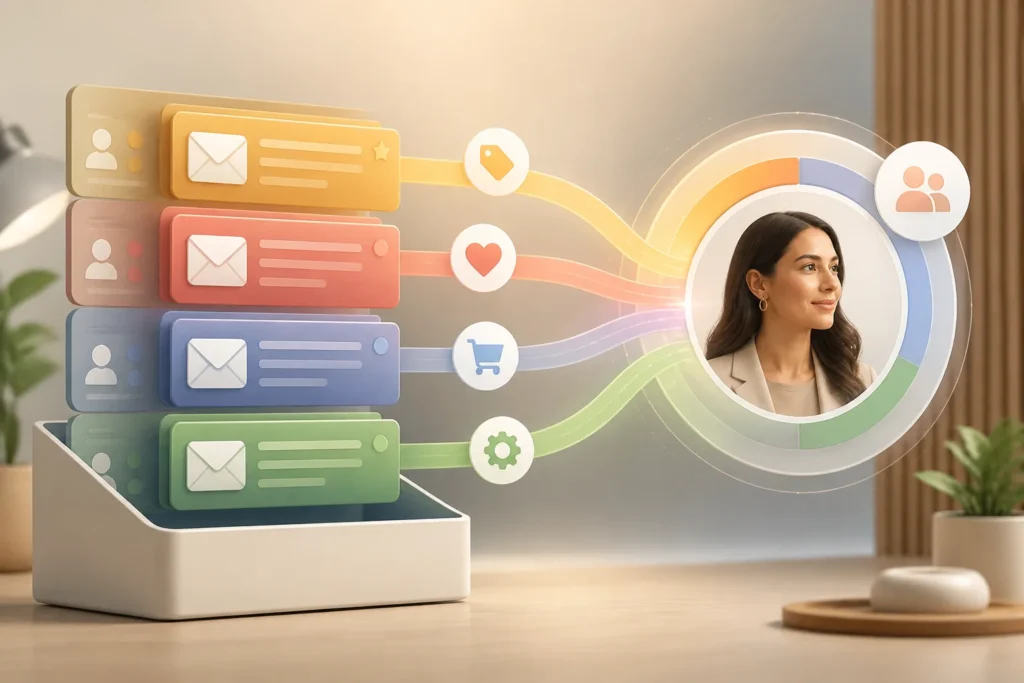
Subscriber segmentation groups people by shared behavior, demographics, interests, or funnel stage. For Social Growth Desk audiences, useful distinctions may include industry, company size, role, funnel position, engagement, plan tier, and past purchases; firmographic and behavioral data can inform content, cadence, and messaging.
How to Build an Email Sequence That Sells Without Feeling Pushy means personalizing around the recipient’s name, company, role, interests, and relevant business benefit rather than sending one message to people with different jobs. How to Build an Email Sequence That Sells Without Feeling Pushy can use behavior too: an abandoned-cart message may mention the person’s name and items left in the cart, while an upsell sequence can use previous purchases. How to Build an Email Sequence That Sells Without Feeling Pushy should treat the reported 26% higher response rate for personalized follow-ups as a source-reported result, not a guarantee.
What should each email’s call to action ask the reader to do?
Each email should have one clear call to action so the recipient isn’t forced to choose among competing next steps. Early in a social-media lead sequence, that CTA might ask someone to download a guide or request more information; during nurturing, it can invite a reply or ask whether the person wants examples.
How to Build an Email Sequence That Sells Without Feeling Pushy matches the CTA to buying stage. A low-commitment information request suits early awareness, a single conversational question suits dialogue, and a direct action suits someone who knows more about the product or service. How to Build an Email Sequence That Sells Without Feeling Pushy could ask an e-commerce lead to return to checkout, an online seller to review pricing plans, or an interested prospect to schedule a demo. How to Build an Email Sequence That Sells Without Feeling Pushy keeps the ask specific: an event sequence may request a reply or form completion to identify interested prospects.

How can you follow up with nonresponders while respecting consent, unsubscribe requests, and inbox frequency?
Nonresponder follow-ups should give a new reason to reply instead of repeating “just checking in.” How to Build an Email Sequence That Sells Without Feeling Pushy means stopping when someone replies, books a meeting, or opts out. How to Build an Email Sequence That Sells Without Feeling Pushy should also include a visible, easy unsubscribe option and suppress contacts with zero engagement after a re-engagement sequence.
How to Build an Email Sequence That Sells Without Feeling Pushy requires inbox restraint because excessive email can increase unsubscribes, harm brand reputation, and decrease engagement. Pause lower-priority sequences while a high-priority sequence runs, and consider removing inactive subscribers after several reactivation attempts when appropriate. The ledger doesn’t provide legal requirements for consent, preference centers, sender authentication, spam complaints, or deliverability monitoring. It also doesn’t provide a detailed branching process for CRM integration or human sales follow-up.
Which metrics should you track to evaluate a sequence, and how can you use them to improve it?
Email-sequence evaluation should use open rates, click-through rates, conversions, and return on investment rather than relying on one measure. Add reply rate, meeting conversion rate, influenced pipeline, bounce rate, and step compliance rate when those outcomes are available. For a creator, agency, or e-commerce brand, these measures can connect email activity with lead nurturing and sales outcomes more usefully than opens alone.
How to Build an Email Sequence That Sells Without Feeling Pushy should use A/B testing to compare subject lines, content, CTAs, and timing. How to Build an Email Sequence That Sells Without Feeling Pushy should inspect the weakest link when performance drops sharply between two emails, because the gap may indicate a content or timing problem. How to Build an Email Sequence That Sells Without Feeling Pushy also calls for regular review, ideally weekly, with adjustments to subject lines, timing, and messaging when key metrics decline. A reported 0.3% click rate is a result to investigate, not a universal benchmark.

| Sequence context | Length stated | Timing stated |
|---|---|---|
| A simple product | three to five emails | — |
| More complex purchases | a longer nurture sequence | — |
| Sequences | 4 to steps | 3-to-7-day spacing between touchpoints |
| Standard B2B leads | a 4-step sequence | over two weeks |
| Most sequences | three to seven emails | — |
| A training sequence example | 14 emails | one per day |
Key Takeaways
- Match each message to the prospect’s buying stage and add a new reason to reply.
- Start with a practical cadence, then widen gaps when appropriate rather than assuming one universal schedule.
- Use one CTA per email and make the request fit the recipient’s level of product knowledge.
- Stop sequences after replies, booked meetings, or opt-outs, and suppress persistently inactive contacts.
- Review clicks, replies, conversions, pipeline, bounces, and compliance together.
Frequently Asked Questions
What are the types of emails?
The ledger identifies six sequence types: welcome, onboarding, nurture, cart recovery, re-engagement, and post-purchase. It doesn’t specify a seventh type.
How do I write a gentle follow-up email?
A gentle follow-up briefly references the earlier message, adds a new proof point, angle, result, or risk perspective, and ends with one low-friction question. Each follow-up should give the recipient a new reason to reply.
How to manage excessive emails?
Manage excessive emails by pausing lower-priority sequences, providing a visible unsubscribe option, and suppressing contacts who show zero engagement after re-engagement attempts. Excessive sending can increase unsubscribes, harm brand reputation, and decrease engagement.
Is cold email still effective in 2026?
The ledger doesn’t establish whether cold email is still effective in 2026. It does recommend measuring reply rates, meeting conversions, influenced pipeline, bounces, and step compliance rather than assuming effectiveness from one metric.

