
How to Automate Your Marketing Without Losing Personalization means combining CRM software, behavioral triggers, dynamic content, and human review so automated campaigns respond to individual customer data rather than sending everyone the same message. Protect the customer experience with consent, fallback paths, frequency controls, and measurement; percent of people reportedly felt companies had lost touch with the human element.
- Marketing automation is software for automating repetitive marketing tasks and delivering personalized experiences at scale.
- Personalization uses profile, behavioral, and contextual data to tailor messaging at an individual level.
- Dynamic content can display different email sections according to subscriber attributes or behavior.
- The available evidence recommends limiting automated email volume to two to three emails per week.
- Weekly investigation is recommended when open rates fall below percent or clicks fall below percent.
How to Automate Your Marketing Without Losing Personalization: What does personalized marketing automation mean, and how does it differ from sending the same automated message to every customer?
Marketing automation uses software and digital tools to handle repetitive marketing tasks, while personalization uses demographic, behavioral, preference, and contextual data to make automatically delivered content feel relevant to an individual. How to Automate Your Marketing Without Losing Personalization starts with separating delivery from relevance: automation sends the message, but customer data determines what the message says and when it appears.
A static workflow might send every new subscriber the same welcome email at the same time, making it automated but not meaningfully personalized. Behavior-responsive automation can adjust messaging and timing according to opens, clicks, preferences, and other signals. How to Automate Your Marketing Without Losing Personalization therefore means using audience segmentation and customer journey stages rather than treating every creator, small business, e-commerce brand, agency, or online seller alike.
Social Growth Desk readers can apply the approach to email marketing, lead generation, social media, and conversion optimization. How to Automate Your Marketing Without Losing Personalization also requires protecting the customer experience: percent of people reportedly felt companies had lost touch with the human element.


Which marketing tasks are best suited to automation, and which should retain human review?
Repeatable marketing workflows are the strongest candidates for automation, including email marketing, automated email sequences, SMS, social media scheduling, lead nurturing, behavioral targeting, personalized advertising, data reporting, and large-scale ad testing. How to Automate Your Marketing Without Losing Personalization means automating consistent steps while keeping decisions that require judgment with people.
Chatbots and AI-driven tools can handle basic questions, audience segmentation, follow-ups, and content assembly, but complex needs should have a clear route to human assistance. How to Automate Your Marketing Without Losing Personalization works best as a human-in-the-loop workflow: AI gathers data, drafts content, and executes repetitive actions; people refine messaging, assess emotional nuance, approve quality, and manage escalation.
Reserve human review for brand storytelling, frustrated complaints, sensitive public communication, legal disclaimers, financial messaging, healthcare-related content, high-stakes communications, and final strategic decisions. How to Automate Your Marketing Without Losing Personalization should never mean removing judgment from sensitive customer interactions.
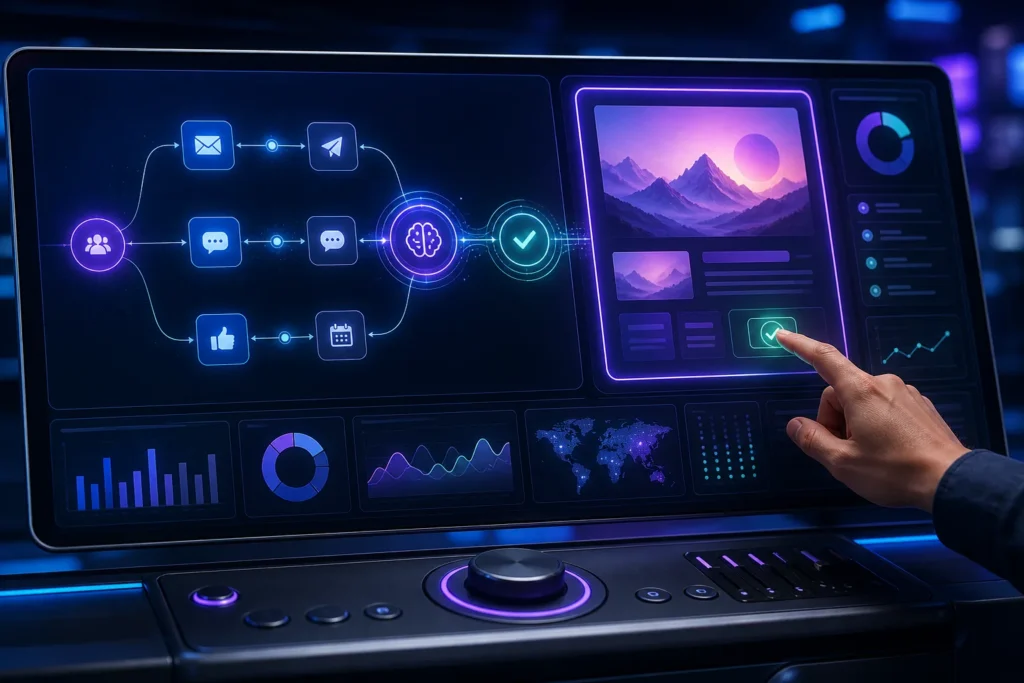
What customer data, CRM integrations, and audience segments are needed to personalize automated campaigns?
Personalization at scale depends on unified customer data that supports identity stitching, behavioral insights, and context-aware decisions. How to Automate Your Marketing Without Losing Personalization starts with profile data such as name, location, job title, industry, and purchase history; behavioral data such as email opens, link clicks, website visits, and purchases; and contextual data such as device, usual engagement time, and buying-cycle position.
Audit your CDP and CRM systems, identify missing customer intelligence, and unify first-party data across touchpoints before activating campaigns. How to Automate Your Marketing Without Losing Personalization also requires checking integrations among CRM software, your website or CMS, calendar, analytics tools, and marketing automation platform.
Build audience segments from demographics, behavior, preferences, purchase history, product-category interest, industry, engagement level, and previous behavior. How to Automate Your Marketing Without Losing Personalization can then support Social Growth Desk examples such as social engagement, influencer or UGC interactions, TikTok Shop activity, email behavior, and e-commerce product interest only when your CRM records those signals reliably.

How can you set up an automated campaign using customer behavior, triggers, and dynamic content?
An automated campaign should begin with a customer journey stage and desired action, then connect CRM and behavioral data, select a trigger, create audience branches, assemble approved content modules, test, and launch. How to Automate Your Marketing Without Losing Personalization means choosing triggers such as form submissions, email clicks, pricing-page visits, eBook downloads, product-page visits, abandoned carts, newsletter sign-ups, birthdays, or non-engagement.
Dynamic content lets conditional email sections show a matching block or a default block according to subscriber attributes or behavior. How to Automate Your Marketing Without Losing Personalization can support lead nurturing, welcome sequences, abandoned-cart recovery, personalized product recommendations, website and landing-page personalization, targeted advertising, and social media follow-up.
Before launch, send test emails, check links and personalization, verify mobile responsiveness, and provide a default block when data matches no condition. How to Automate Your Marketing Without Losing Personalization should also include A/B tests for tailored content, offers, and messaging, plus a behavioral branch in an existing nurture sequence where follow-up could become more relevant.
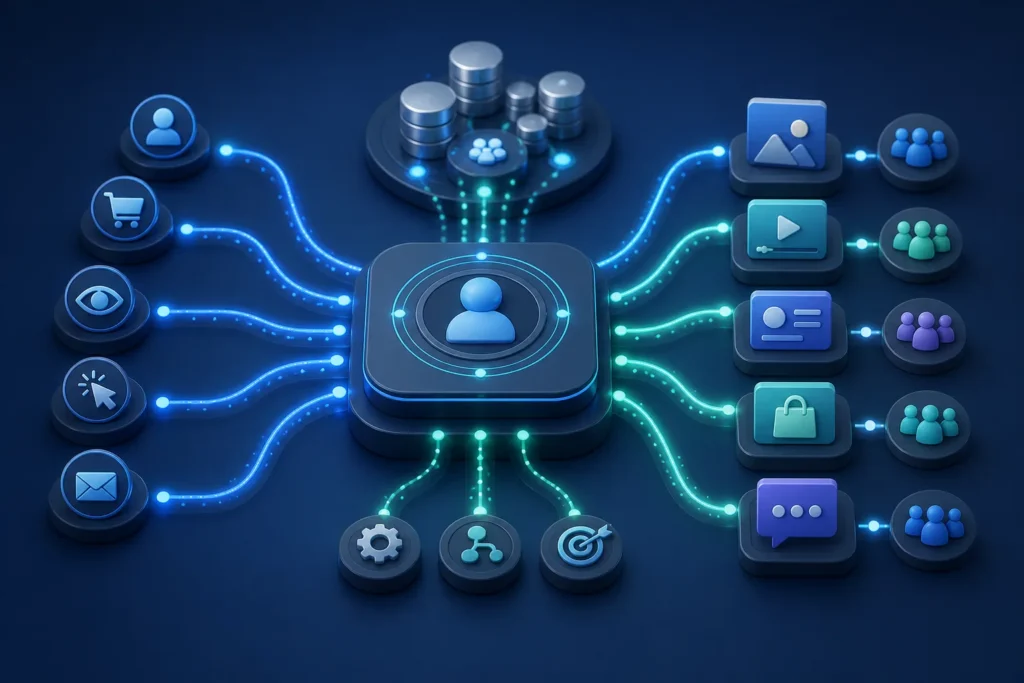
What does marketing automation typically cost, and which factors affect the price?
No typical price range or fixed cost figure for marketing automation is provided in the available evidence. How to Automate Your Marketing Without Losing Personalization should therefore begin with fit, not an invented budget: platform cost and suitability can be evaluated against company size, scalability, features, CRM integration, and other factors.
How to Automate Your Marketing Without Losing Personalization requires a buying checklist that covers CRM, website or CMS, calendar, analytics, and marketing automation integrations. A creator or small business may prioritize a manageable workflow, while an e-commerce brand or online seller may need stronger connections between customer behavior and product interest; the supplied evidence provides no package prices for these cases.
How to Automate Your Marketing Without Losing Personalization also has implementation considerations separate from platform fees: data cleanup, audience segmentation, content production, testing, human review, and campaign monitoring. Those are planning needs, not published prices. Agencies should additionally assess how the chosen system fits repeatable client workflows, but no vendor-specific fee or cost comparison is available.
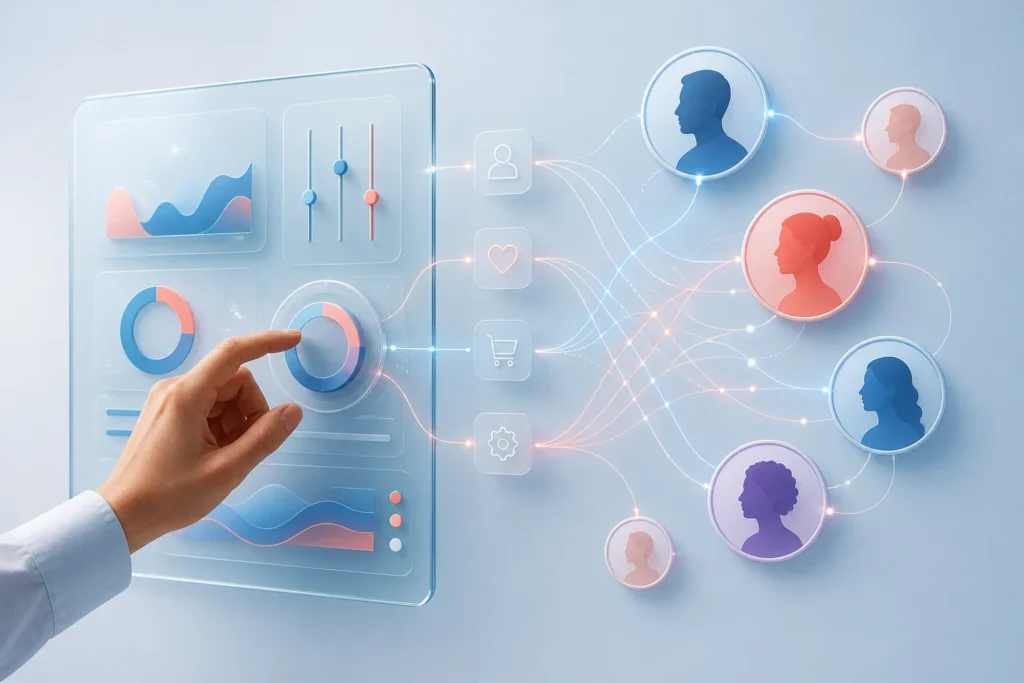

How can you reduce the risks of inaccurate personalization, privacy violations, and messages that feel impersonal?
Responsible personalization uses transparent data practices, opt-in controls, tangible customer benefits, and only the information that adds genuine value. How to Automate Your Marketing Without Losing Personalization means cleaning CRM records for missing properties, outdated information, and inconsistent data before activating personalized campaigns.
How to Automate Your Marketing Without Losing Personalization also requires frequency caps and coordinated communication across email, social media, ads, chatbots, and website experiences so customers don’t receive repetitive messages. The available evidence recommends limiting automated email volume to two or three emails per week, but it provides no cross-channel frequency standard.
Use a real sender name, photo, and inbox for replies to add a human touch to automated email. How to Automate Your Marketing Without Losing Personalization should include fallback paths when AI output is uncertain, chatbot needs become complex, or public communication is sensitive: route the interaction to human review and escalation. Inclusive personalization should use relevant, reliable data and offer a default experience for incomplete profiles; no specific bias-audit method or demographic fairness statistic is provided.
Which metrics show whether automated campaigns are improving personalization, and how often should you adjust them?
Marketing teams can assess personalization with open rates, click-through rates, sequence conversion rates, lead-to-customer conversion, engagement trends, social engagement, and conversion data across customer touchpoints. How to Automate Your Marketing Without Losing Personalization means pairing engagement metrics with business outcomes such as revenue attribution, sales-cycle reduction, customer lifetime value, team efficiency, and lead-quality score.
How to Automate Your Marketing Without Losing Personalization also requires watching for opt-out spikes, complaints, rising unsubscribe rates, and sequence points where disengagement consistently increases; these can signal over-targeting, fatigue, poor timing, or tone mismatch. Use A/B tests and control groups where available to compare tailored content with a non-personalized experience, but no incremental-lift figure or control-group design is provided.
How to Automate Your Marketing Without Losing Personalization should include weekly checks of open and click thresholds; the supplied guidance identifies open rates below percent or clicks below percent as reasons to investigate. Review broader business measures monthly, monitor campaigns regularly, and adjust messaging, timing, or audience when performance is insufficient. Revisit automation decisions as tools, priorities, or tasks change.

| Source | Email open-rate signal | Click-through or click signal | Other performance signals |
|---|---|---|---|
| aprimo.com | Email open rates | click-through rates | social media engagement |
| apeakmarketing.com | — | click-through rates on specific content | sequence conversion rates, lead-to-customer conversion rates, and engagement… |
| hubspot.com | open rates fall below 15% | clicks fall below 2% | — |
Key Takeaways
- Unify and clean CRM data before using behavioral triggers or audience segmentation.
- Automate repeatable email, SMS, social, and lead-nurturing workflows while reserving sensitive decisions for people.
- Use dynamic content, default blocks, tests, and human escalation to prevent inaccurate or impersonal experiences.
- Coordinate frequency across channels and limit automated email volume to two or three emails per week.
- Review engagement weekly and broader business measures monthly, then change messaging, timing, or audience when results are insufficient.
Frequently Asked Questions
What is the 3-3-3 rule for marketing?
The available evidence doesn’t define a 3-3-3 rule for marketing, so no reliable explanation or percentage can be provided from the supplied material.
What is the/20/10 rule in marketing?
The available evidence doesn’t define a/20/10 rule for marketing, so its percentages and recommended use are unknown from the supplied material.
How do you automate marketing?
You automate marketing by using software for repetitive tasks, connecting CRM and behavioral data, defining triggers, and delivering relevant content automatically. Marketing automation can cover email, SMS, social posts, segmentation, lead nurturing, and follow-ups.
Is it how to automate ad personalization?
Ad personalization uses contact behavior, preferences, and signals to tailor marketing messages, content, and timing instead of giving every person the same experience. The supplied evidence doesn’t establish a separate method called “how to automate ad personalization.”

