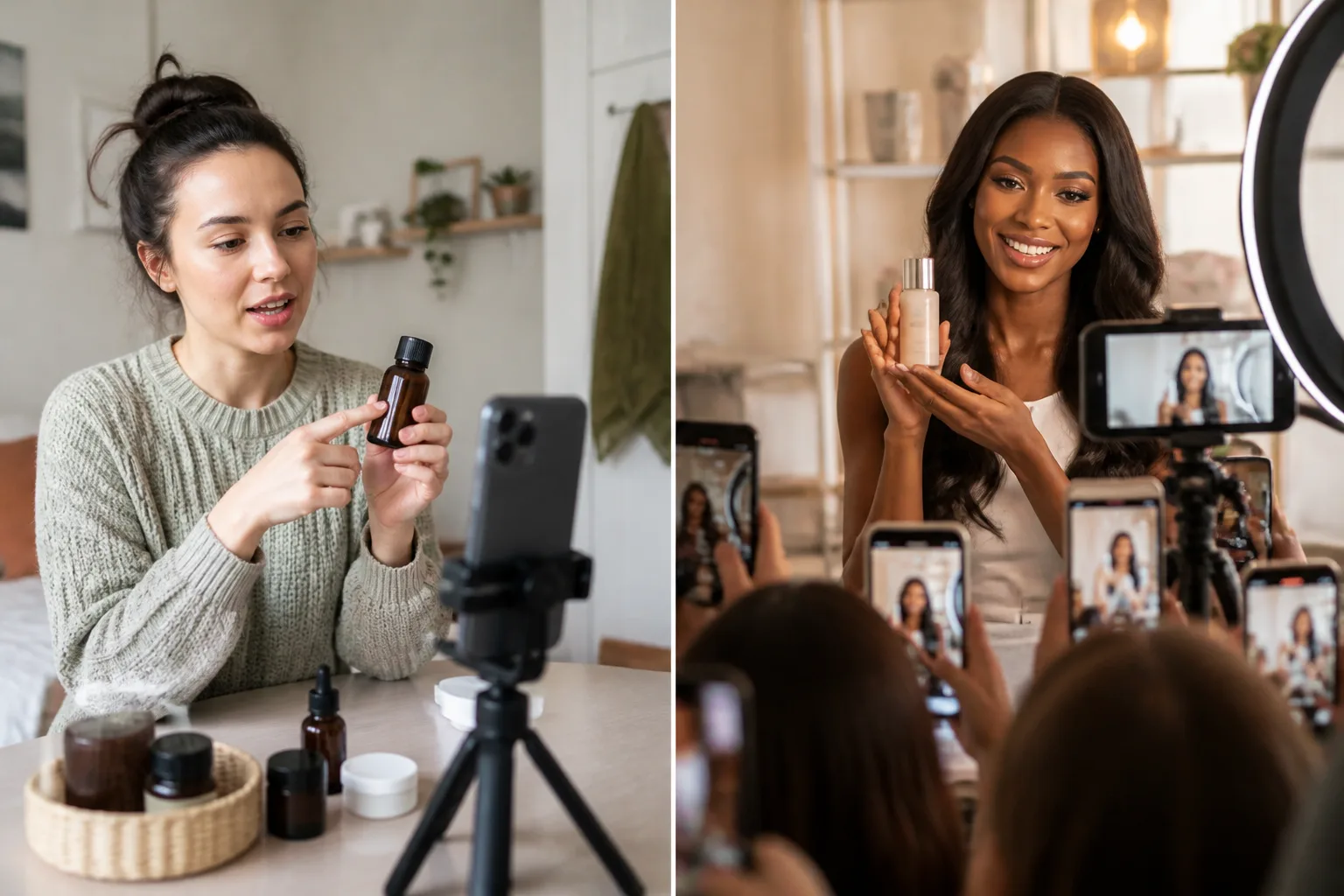

UGC vs Influencer Marketing: Which Gets Better ROI in 2027—and which strategy fits your campaign?
Neither format wins in every campaign: UGC often gives you more creative assets to test in paid social, while influencer marketing can add creator-audience reach and social proof. Your return depends on the objective, audience fit, rights, and measurement—not the format name alone.
User-generated content (UGC) is content created by customers or creators for a brand, while commissioned creator content made for a brand is not automatically a customer-created post. For Social Growth Desk readers—from online sellers to agencies—the practical question is how well each approach turns social attention into leads or sales.
Use the comparison in this UGC vs influencer marketing guide as a way to frame a test, not as a promise of a universal winner. Judge results against your own baseline and the campaign objective. A reach campaign and a sales campaign need different success measures.
This discussion of UGC vs influencer marketing covers creative, distribution, costs, rights, attribution, and testing. The same principles apply whether you sell products through an ecommerce store, work with clients as an agency, or use social content to generate service leads.
When you assess UGC vs influencer marketing, start by deciding what the campaign must accomplish. If you need a bank of assets for paid social advertising, UGC-style creator content may be a fit. If you need a trusted voice to introduce your product to a relevant audience, influencer distribution may be the stronger starting point.

What is the difference between UGC and influencer marketing?
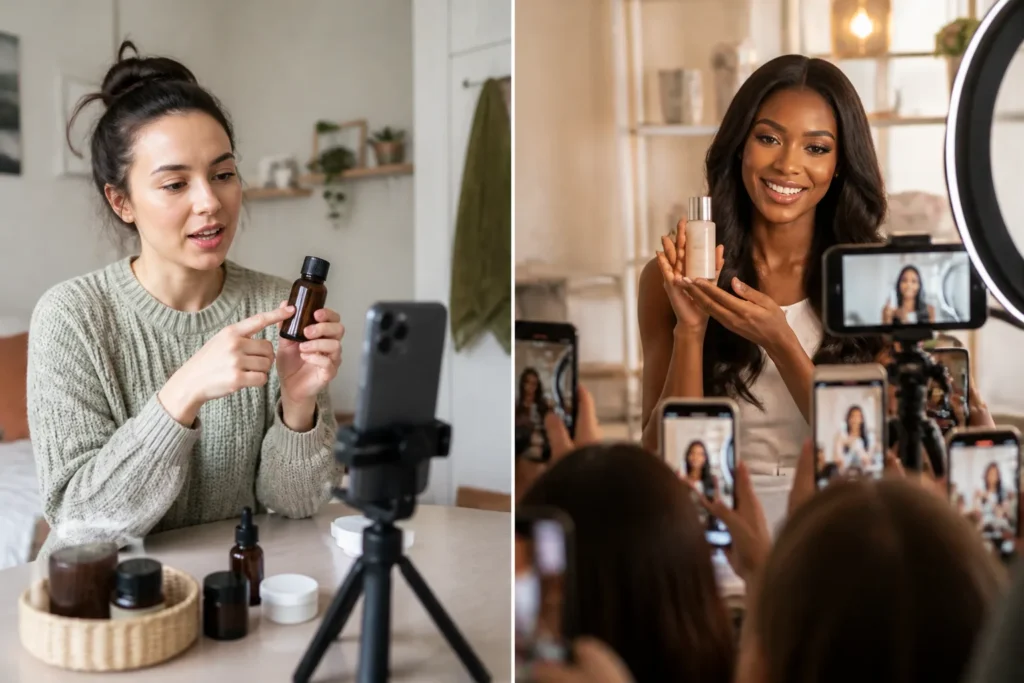
UGC describes content and its style or source; influencer marketing is a partnership that typically includes distribution to a creator’s audience. A UGC creator can make content for a brand without having a large following or posting it on their own channels. The terms describe different parts of a campaign, so they can overlap.
| Format | Who publishes | Creator audience | Reach | Audience trust | Social proof | Brand control | Typical funnel role | Paid amplification possible? |
|---|---|---|---|---|---|---|---|---|
| Customer-created UGC | Customer on their own account | Usually incidental | Depends on account and sharing | Can feel firsthand; varies by context | Customer experience | Limited unless rights are granted | Consideration | Only with appropriate permission |
| Commissioned creator content | Brand channels or ads; creator may also post | Optional | Brand media, creator post, or both | Depends on fit and disclosure | Creator demonstration or endorsement | Set by brief and agreement | Consideration and conversion | Yes, subject to rights and platform rules |
| Influencer partnership | Creator’s account, sometimes brand channels too | Central to the deal | Creator distribution plus any paid support | Depends on audience relationship and relevance | Creator endorsement and comments | Shared through negotiated terms | Awareness through conversion | Often, if authorized |
| Studio ad | Brand account or paid placement | None required | Purchased or organic distribution | Brand-led rather than creator-led | Usually product or brand proof | Typically higher production control | Any stage, depending on message | Yes |
Creator content is a production choice; customer testimonials are a source of customer experience; studio ads are a production style. None automatically determines where content appears or who sees it. A testimonial can be filmed in a studio, and creator-made content can be posted by the brand rather than the creator.
Follower count matters more when you’re paying for distribution to a creator audience. For UGC made for your own channels or ads, content quality, audience fit, clarity, and usage rights can matter more than the creator’s reach. In practice, that distinction helps prevent paying for an audience you don’t need.
Keep the roles clear when considering UGC vs influencer marketing: ask who creates the asset, who publishes it, who owns or licenses it, and where it will be distributed. Those answers determine the format’s reach, control, and likely place in your marketing funnel.
How should you compare UGC and influencer ROI?
Compare like with like by campaign objective, platform, industry, audience size, and measurement window. A low cost per asset doesn’t automatically mean a low cost per acquisition (CPA): you also need to account for media spend, conversions, and the value of the outcomes. Compare campaigns using the same definitions wherever possible.
Build a simple calculation path before launch. Record the cost of each asset, creator fees, paid media spend, attributed conversions, CPA, and return on ad spend (ROAS). Keep creator fees separate from media costs so you can see whether performance came from the content, the creator’s distribution, or paid amplification.
- Cost per asset: divide the relevant creation and editing cost by the number of usable assets delivered.
- CPA: divide eligible campaign costs by attributed conversions, using a consistent cost definition.
- ROAS: compare attributed revenue with paid media spend, and state clearly whether creator and production costs are included.
For benchmarks, build a table with rows for platform, industry, campaign objective, and audience size. Use published ranges only when the source, date, market, definitions, and measurement window are comparable. If you can’t verify those details, label the benchmark unavailable rather than treating a different campaign’s result as a target.
Use your account baseline instead: compare the test with similar prior campaigns on the same platform, audience, offer, and objective. Reach and views show delivery, while conversions show actions; neither alone establishes profit. CPM can help you assess the cost of delivery, but a low CPM does not prove that sales were incremental or profitable.
Attribution needs a reality check. Where feasible, use a holdout or matched comparison, apply consistent UTMs and conversion windows, and document exclusions before launch. Review campaign lift alongside view-through conversions, branded search, and organic demand; don’t credit every sale observed during a campaign to that campaign.
For a sound UGC vs influencer marketing comparison, judge each format with the same objective and cost boundaries. If you compare an influencer’s reach campaign with a UGC conversion ad, you’re comparing different jobs. The analysis in this comparison is most useful when you separate delivery, attributed action, and incremental lift.
Keep your UGC vs influencer marketing decision tied to your own baseline: results can vary by market, offer, audience, and platform. When a comparable published range isn’t verified, report that limitation and make the next test more comparable instead of filling the gap with an unsupported number.

Find UGC content creators on Fiverr
What does each approach really cost, and who controls the content?
Compare the full campaign cost, not just the creator fee. Production, editing, paid media, usage rights, and campaign management can materially change the economics of either approach. A quote is only one line in the budget; the distribution plan and the rights you need can change the total.
Build your cost model with these line items:
- Creator fees: payment for creation, posting, or both.
- Production and editing: filming, reshoots, captions, cutdowns, and revisions.
- Paid media: spend used to distribute or amplify the content.
- Usage rights: licensing for channels, paid ads, territory, and duration.
- Campaign management: briefing, creator coordination, approvals, reporting, and payments.
- Platform or commerce fees: any applicable fees connected with the specific platform, market, and transaction.
Influencer quotes vary with deliverables, platform, audience size, engagement quality, exclusivity, and rights. Don’t use a follower-tier rate range unless it comes from a current, dated source with a clear definition of the deliverable and market. Request itemized quotes instead, then compare the same package across creators.
Content ownership and usage rights are different. Confirm in writing who owns the original work and what the brand may use. Specify permitted channels, paid-ad use, territory, licensing duration, editing permissions, exclusivity, and renewal terms. A creator agreeing to publish a post doesn’t automatically mean the brand can use it in ads indefinitely.
Whitelisting and TikTok Spark Ads can let a brand run authorized content through or from a creator identity, subject to platform permissions. Agree in advance on authorization, duration, ad spend, account access, and required disclosures. For TikTok Shop campaigns, verify current seller and transaction fees for your market and product category before modeling margins; one fee should not be treated as universal.
In UGC vs influencer marketing, the cost comparison only works when both the asset and its distribution are counted. The same applies to both formats when negotiating rights: calculate the value of the channels and time period you actually need, not a vague promise of “usage.”
Before approving a budget for UGC vs influencer marketing, put the complete fee, rights, and media assumptions into one shared plan. This gives your team a fair cost per asset and a clearer view of what would need to perform for the campaign to pay back.

When does UGC or influencer marketing perform better in the funnel?
Choose the format based on the job it needs to do. UGC can supply varied creative for paid social and retargeting, while an influencer partnership can introduce a brand to a creator audience and provide social proof. A campaign can use both, but define each role so you can measure what it contributes.
Map the plan to the marketing funnel:
- Awareness and reach: influencer posts can put a product in front of a relevant creator audience. UGC can extend discovery when distributed through brand channels or paid placements.
- Consideration and trust: a creator demonstration or customer testimonial can answer practical questions and show how a product fits into daily use.
- Conversion: clear product details, a relevant offer, and a direct call to action can support a purchase or lead action. Track conversions rather than judging only by views.
- Retargeting warm audiences: use licensed creator content to address objections for people who have already visited, watched, or engaged, where platform rules and permissions allow.
Creative testing makes the difference between a content library and a pile of files. Test distinct hooks, demonstrations, testimonials, offers, and calls to action. Where possible, compare ad variations using the same audience, objective, placement, and budget conditions so a result is less likely to reflect a different setup.
For example, an online seller could test one short product demonstration against a customer-style testimonial and a creator explaining a common use case. If the demonstration earns attention but the testimonial produces more qualified visits, the team has learned which message works at each stage—not just which video got more views.
Watch for creative fatigue by checking delivery and performance over time. When an asset weakens, refresh its hook, opening shot, format, or proof point rather than assuming the whole campaign has failed. Posting frequency is a campaign decision, not a universal rule: set a cadence that fits creator capacity, audience expectations, and how many assets you need to test.
Email can support the social campaign if it captures useful follow-up. Assess sign-ups and later sales from social traffic; treat open rates cautiously because they don’t necessarily show meaningful action. Clicks and conversions are stronger signals of response.
Use the UGC vs influencer marketing comparison to decide which funnel task needs attention first. In this matchup, a relevant creator can help discovery, while authorized creator assets can give paid social advertising more variations for consideration and retargeting.
For UGC vs influencer marketing, make the journey visible: record where the viewer first encountered the content, what action followed, and whether the action became a lead or sale. That context is more useful than choosing a format based on reach alone.
Where can UGC and influencer campaigns go wrong?
The main risks are weak audience quality, repetitive creative, unclear instructions, and gaps in rights or disclosure. A polished asset or large follower count alone doesn’t prove a campaign will reach the right people or convert. Reduce risk with a clear brief, creator checks, and written permissions before publishing.
UGC can develop a sameness problem when every creator receives the same script, framing, and product claims. It can also drift away from approved messaging. Write creator briefs that include required product facts, claims to avoid, tone guidance, deliverables, review steps, and deadlines, while leaving room for a natural voice. Review factual claims and required disclosures before content goes live.
Studio ads may be a better fit when you need precise claims, tightly controlled visuals, or a complex product demonstration. For instance, a product with multiple setup steps may need a clear, controlled sequence that is difficult to capture casually. Studio production doesn’t guarantee results, though; test the finished ad against other creative using the same audience and objective.
Use a creator-vetting checklist rather than relying on follower count:
- Review whether the audience appears relevant to your market and product.
- Look for suspicious follower patterns or engagement that doesn’t fit the account’s content.
- Check whether comments and interactions are relevant, not just numerous.
- Review prior posts for brand safety, tone, and consistency.
- Assess whether the creator can explain or demonstrate the product credibly.
Paid partnership labels and other disclosures matter when a creator receives payment, gifts, or another material benefit. Require a disclosure that viewers can understand, and check the applicable platform rules and local regulations. Don’t assume a platform label alone satisfies every requirement; build the disclosure into the brief and review the published post.
Generative AI and synthetic creators can complicate authenticity and audience trust, particularly when content looks like a real person’s firsthand experience. Require human review of product claims and disclosures, and check current platform and legal requirements for synthetic or altered content. For B2B and AI product launches, be especially clear about what the product does, what is demonstrated, and whether a creator is describing actual use or a scripted scenario.
The risk review for UGC vs influencer marketing should cover audience quality as well as production quality. For either format, an attractive asset is not a substitute for a relevant audience, accurate claims, and a usable license.
Include these checks in your UGC vs influencer marketing plan before you approve the campaign: verify claims, confirm rights, review disclosure wording, and make sure the creator understands what must—and must not—be said.
How can a brand test both approaches before scaling?
Run a controlled pilot that holds the offer and objective steady, then compare content production and creator distribution separately where possible. Scale the combination only when each role is clear and measurement supports it. A small test can expose missing rights, weak messaging, or an attribution problem before you commit to a broader campaign.
- Define the objective and baseline. Choose one measurable outcome, such as qualified leads or purchases, and record how comparable campaigns perform now.
- Select the platform and audience. Choose a channel based on where the intended audience can be reached and how the result will be measured.
- Shortlist and vet creators. Review audience fit, content history, engagement relevance, and brand safety.
- Agree on briefs, deliverables, fees, rights, and disclosures. Put permissions, licensing duration, exclusivity, and any paid amplification access in writing.
- Produce assets. Request distinct hooks or demonstrations, not several near-identical edits.
- Launch comparable tests. Keep the offer, audience, and objective aligned when comparing variations.
- Review CPA, ROAS, and incremental lift. Separate media costs from production and creator fees; document your attribution window and exclusions.
- Renew or revise. Keep what met its role, change what underperformed, and expand only when the evidence supports it.
You can combine formats without confusing their contribution. Use influencer posts for discovery and creator-audience reach, then adapt licensed creator content into paid social ads and retargeting for warm audiences. A brand might first use a creator’s post to introduce a new product, then test an authorized cutdown against other ads for people who visited the product page.
Track cost per asset and total campaign cost alongside reach, conversions, CPA, and ROAS. Document attribution windows and exclusions before launch so you don’t change the measurement rules after seeing results. Practical tool categories include platform analytics, ad manager reporting, link tagging, ecommerce conversion reporting, and a shared rights and deliverables tracker.
For example, an Instagram campaign might use creator posts for discovery and licensed assets in Meta’s ad manager for a separate paid test. Keep the audiences and objectives clear, and don’t assume that Instagram reach or ad delivery alone proves incremental sales.
Apply UGC vs influencer marketing as a test design question: what is being created, who distributes it, and what outcome will count? A useful UGC vs influencer marketing pilot isolates those variables instead of bundling every cost and placement into one unexplained result.
When you review your results, preserve the details of the setup. That record lets you repeat a successful test fairly, explain a weak one, and make the next budget decision with evidence rather than assumptions.
What should your brand do next to improve ROI?
Choose one measurable objective, establish a baseline, and run a small, comparable test before committing to a broad campaign. Prioritize UGC when you need a repeatable library of testable assets; prioritize influencer partnerships when relevant creator-audience reach and endorsement are central. Combine them when budget, rights, and measurement support both roles.
Make the first decision based on the constraint you need to solve. If your paid social team has too few creative variations, commission assets with distinct hooks, product demonstrations, and calls to action. If your offer needs a trusted introduction to a relevant community, shortlist creators whose audience and content fit the product—not simply the biggest accounts available.
Before launch, work through this checklist:
- Verify audience fit and creator suitability.
- Calculate the full cost model, including production, editing, media, management, and fees that apply to your market.
- Confirm content ownership, usage rights, channels, and licensing duration.
- Agree on exclusivity and any whitelisting or TikTok Spark Ads permissions.
- Approve creator briefs, deliverables, review steps, and claims guidance.
- Document paid partnership disclosures, attribution windows, and exclusions.
Then set a review date before the campaign begins. Compare the test with your baseline using the same definitions for conversions and costs. If reach improved but sales didn’t, investigate the offer, landing experience, or audience fit before simply buying more reach. If an asset drove conversions, check whether the result holds when the content runs to a comparable audience.
For Social Growth Desk readers, the next step is a practical one: use the pilot to refine your social content system. Creators, small businesses, ecommerce brands, agencies, and online sellers can all benefit from knowing which assets earn attention and which move people toward measurable leads or sales.
Let UGC vs influencer marketing research guide the decision, but let your own test determine the budget. The useful outcome of this head-to-head is a clear role for each format, a cost model you can repeat, and a measurement plan your team trusts.
As you revisit UGC vs influencer marketing, refine the next brief or creator shortlist using what the pilot showed. Keep the social attention that leads somewhere, and change the parts that didn’t connect to an action.
Watch the breakdown
What should your brand do next to improve ROI?
Make your next move a focused pilot, not a broad commitment. Pick one objective, document the baseline, and compare formats under conditions that are as similar as possible. That gives you a practical way to decide whether assets, creator distribution, or both deserve more budget.
Use this decision rule: choose UGC when you need a repeatable library of testable creative; choose an influencer partnership when relevant creator-audience reach and endorsement are central; combine them when the budget, permissions, and reporting support both. A brand launching a product, for example, might use a creator post to introduce it, then test licensed content in paid social to see whether it helps convert warm visitors.
Before signing off, confirm the essentials: audience fit; full campaign cost; content ownership and usage rights; licensing duration; exclusivity; whitelisting or Spark Ads permissions; approved creator briefs; and disclosure and attribution plans. If any of those remain unclear, resolve them before production or publication rather than assuming they can be fixed after the content performs.
After the pilot, review reach and views separately from conversions. Compare CPA and ROAS using the cost definitions you set in advance, and consider whether a holdout or matched comparison can help identify incremental lift. Use the result to update your content plan, rights tracker, and next round of creative testing.
Social Growth Desk’s practical advice is simple: build a social content system that connects attention to an action you can measure. For creators, small businesses, ecommerce brands, agencies, and online sellers, a careful test can show what to repeat, what to revise, and where social activity is producing real leads or sales.
Return to the UGC vs influencer marketing question when you set the next test, but use your own results to choose. A clear decision about UGC vs influencer marketing starts with a defined job for each format and ends with evidence from comparable measurement.
Keep your UGC vs influencer marketing choice grounded in audience fit, permissions, and outcomes. Then put the next small test on the calendar and use what it teaches to improve the way your brand earns attention and turns it into business.
You asked, we answer
What’s the difference between UGC and influencer?
UGC describes content created by customers or creators, while influencer marketing is a partnership that typically includes a creator publishing to their own audience. A UGC creator can make assets for a brand without having a large following or posting them on their own channels.
Does influencer marketing work in 2026?
It can work when the creator’s audience fits your offer and the campaign has a clear objective, suitable rights, and consistent measurement. Results vary, so compare performance with your own baseline rather than assuming a format will produce a particular return.
What’s a good CPM for influencer marketing?
There isn’t one universally good CPM because platform, industry, audience, placement, and campaign objective affect what delivery costs mean. Use CPM to assess reach efficiency, then review conversions, CPA, and incremental lift to judge business value.
Which type of influencer might be primarily behind the scenes in your marketing campaign?
A UGC creator may work behind the scenes by producing content for a brand’s channels or ads without publishing it to a personal audience. The brand should confirm usage rights and paid-ad permissions in writing.
Should a small business choose UGC or influencer marketing first?
Choose UGC first if you need a library of creative assets to test; choose an influencer partnership if relevant creator-audience reach and endorsement are the main need. Start with a small pilot and compare results against a clear baseline.
Can you use influencer content in paid ads?
You can use creator content in paid ads only when the agreement and platform permissions allow it. Confirm channels, licensing duration, editing rights, exclusivity, authorization, and disclosure requirements before launch.
Your playbook
- Neither UGC nor influencer marketing guarantees better ROI; choose according to the campaign objective, audience fit, distribution plan, and measurement.
- Compare the full campaign cost—including creator fees, production, editing, paid media, rights, and management—not just the fee per post or asset.
- Use comparable tests, consistent attribution windows, and your own account baseline; views and CPM alone don’t prove profitability or incremental lift.
- Put usage rights, licensing duration, exclusivity, paid amplification permissions, creator briefs, and disclosure plans in writing before publication.
- Run a small pilot, review CPA, ROAS, and incremental outcomes, then scale only the roles and creative that the evidence supports.
- Judge UGC vs influencer marketing by cost per asset and cost per acquisition from a small test, not by reach alone.
