What Makes an Email Marketing Campaign Actually Convert is a clearly defined action matched to the email, landing page, audience, and measurement method. Mailchimp’s example shows sign-ups from 10,000 recipients producing a 5% rate, while Link Mobility’s example produces 4% from goals out of 1,000 emails.
- Email conversion rate is calculated by dividing conversions by delivered emails and multiplying by 100.
- Broadcast campaigns typically convert at 1–5%, while abandoned-cart sequences recover 10–15% of lost purchases.
- Bulk emails can achieve 30–40% open rates with good list health and an engaged audience.
- Personalized content is reported to generate seven times the revenue of a generic send.
- Mailchimp’s example shows cost per conversion falling from $4 to $2.50 when click-throughs rise with the same budget.
What Makes an Email Marketing Campaign Actually Convert—and what counts as a conversion?
What Makes an Email Marketing Campaign Actually Convert is a campaign where recipients complete the action specified in the message, such as a purchase, form submission, sign-up, or other call-to-action response. Mailchimp also treats opening an email as a possible call-to-action response, so you should define the goal before measuring results.
What Makes an Email Marketing Campaign Actually Convert can be measured with a standard calculation: divide conversions by delivered emails and multiply by 100. Five hundred sign-ups from 10,000 recipients produce a 5% conversion rate, while completed goals from 1,000 emails produce 4%.
For Social Growth Desk readers, What Makes an Email Marketing Campaign Actually Convert starts with one primary action for each campaign type and the same definition between sends. Your landing page or form should match the email, stay focused, and reduce steps between the click and goal.
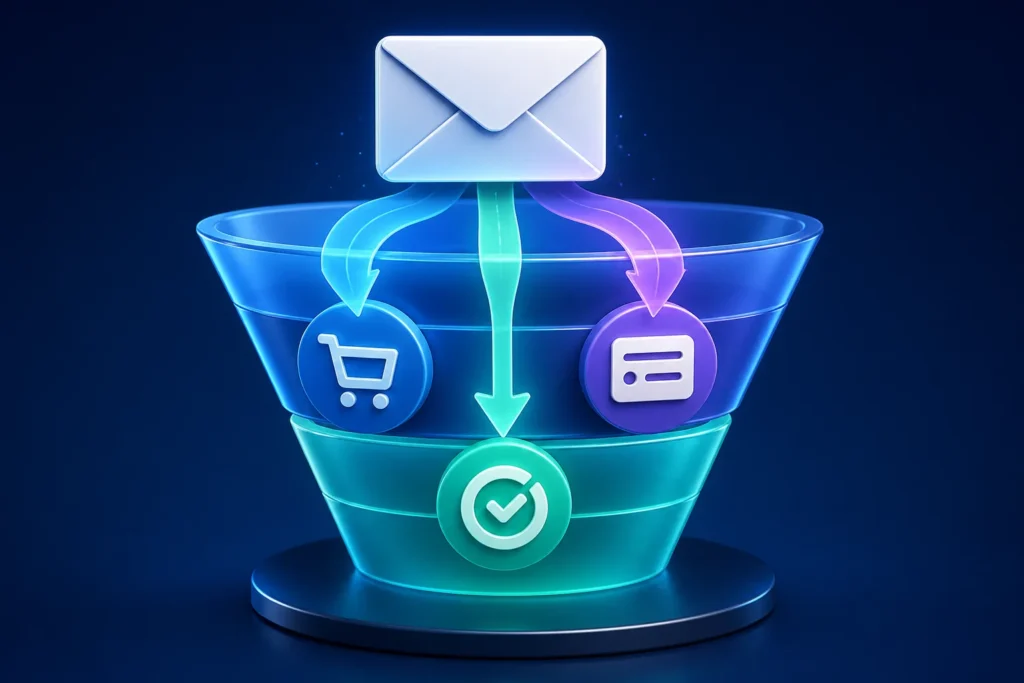

Which email campaign metrics best predict conversions, and what benchmarks should be compared by industry and campaign type?
What Makes an Email Marketing Campaign Actually Convert is better judged by completed business results than by engagement alone. Opens and clicks show engagement, while conversion indicates whether the campaign produced its intended business result.
What Makes an Email Marketing Campaign Actually Convert varies by campaign type: broadcast campaigns typically convert at 1–5%, abandoned-cart sequences recover 10–15% of lost purchases, welcome series average 3%, and post-purchase follow-ups average 6.8%. Email-to-purchase examples are 1.92% for beauty, 1.4% for fashion, 5.8% for fintech, and 2.77% for pets.
What Makes an Email Marketing Campaign Actually Convert should also be read alongside engagement references: healthy, engaged lists may see 30–40% bulk-email open rates, while 10.5% is a click-to-open benchmark. Compare campaigns only when the denominator and measurement method stay consistent; the same orders can represent 0.3% of addresses mailed or 7.5% of clickers.
How should subscriber segments and personalization be chosen to increase conversions?
What Makes an Email Marketing Campaign Actually Convert depends partly on sending a relevant message to the right group, not one identical message to every subscriber. Segment by behavior, demographics, or lifecycle stage.
What Makes an Email Marketing Campaign Actually Convert can be improved with behavioral inputs such as browsing activity, purchase history, average order value, order type, previous opens, and previous clicks. Demographic segments can use age, gender, income, or occupation; psychographic segments can use lifestyle, interests, or attitudes; behavioral segments reflect content and product interactions; geographic segments reflect where people live.
What Makes an Email Marketing Campaign Actually Convert also requires lifecycle context: qualified leads may need different treatment from existing customers. Try different incentives for different potential-customer groups and compare which offers work. Personalize product suggestions, messaging, timing, and follow-up using preferences, past interactions, and CRM records. One source reports seven times the revenue for personalized content compared with a generic send. Offer relevance is especially important for Social Growth Desk’s creators, small businesses, e-commerce brands, agencies, and online sellers.

Which subject line, preview text, offer, and call to action elements should an email include to drive a specific action?
What Makes an Email Marketing Campaign Actually Convert requires separating the subject line’s effect on opens from the email’s effect on conversions. Those metrics use different denominators and measure different outcomes.
What Makes an Email Marketing Campaign Actually Convert can begin with a personalized subject line: subject lines using a recipient’s name, job title, recent purchase, or another personal detail are reported as 50% more likely to be opened. Curiosity, urgency, discount numbers, and personalization are recommended, with guidance of 61–70 characters or about characters for mobile.
What Makes an Email Marketing Campaign Actually Convert should then focus attention on one primary call to action rather than several competing prompts. Use a visible, actionable, persuasive prompt and active verbs such as “buy” or “join”; examples include “Claim 20% Off Now” and “Reserve Your Spot Today”. The offer, email message, landing page, and call to action should point to one defined action. The available claims provide no separate preview-text benchmark.
How can A/B testing determine the best email content, send time, and audience before a full campaign launch?
What Makes an Email Marketing Campaign Actually Convert can be tested before a full launch by comparing two email versions sent to different audience segments. A/B tests can examine subject lines and calls to action.
What Makes an Email Marketing Campaign Actually Convert is easier to interpret when you change one variable at a time. Testing a subject line, button placement, layout, or send time separately helps connect the result to the tested change.
What Makes an Email Marketing Campaign Actually Convert shouldn't be decided after a rushed comparison. Run the test long enough to produce statistically significant results, with the duration tied to how long conversions usually take. Judge the winning version against the campaign’s defined conversion action, not only its open rate. Opens can provide directional signals, but they aren't suitable as the conversion-rate denominator because some open events occur without a person.


How do deliverability problems, unsubscribe rates, and email consent rules affect campaign conversions?
What Makes an Email Marketing Campaign Actually Convert depends on messages reaching recipients who can act on them. Poor list hygiene, including continuing to email unengaged subscribers, can hurt deliverability.
What Makes an Email Marketing Campaign Actually Convert must therefore use delivered emails in the denominator, rather than simply the number of addresses mailed. That distinction changes the reported rate: one source describes orders as 0.3% of addresses mailed or 7.5% of people who clicked, depending on the denominator.
What Makes an Email Marketing Campaign Actually Convert is easier to audit when you tag links consistently. Google’s campaign URL guidance calls for utm_source, utm_medium, and utm_campaign. The available claims don't provide specific unsubscribe-rate benchmarks or email-consent rules. Those details must be researched separately rather than inferred from the conversion benchmarks here.

How should revenue per email, conversion value, and campaign costs be measured to determine whether an email campaign is profitable?
What Makes an Email Marketing Campaign Actually Convert financially means tracking delivered emails, completed conversions, the value assigned to those conversions, and campaign spending. Keep one conversion definition consistent between sends, and calculate the rate from conversions divided by delivered emails, multiplied by 100.
What Makes an Email Marketing Campaign Actually Convert can be evaluated with a cost-per-conversion example from Mailchimp: $2,000 in monthly spending and click-throughs produces $4 per conversion, while click-throughs with the same budget produces $2.50 per conversion. Profitability still requires comparing campaign costs with the value assigned to completed actions; the available claims don't provide a universal revenue-per-email formula or fixed conversion-value method.
What Makes an Email Marketing Campaign Actually Convert should be measured through a repeatable workflow: define the action, tag the campaign with utm_source, utm_medium, and utm_campaign, attribute conversions, record costs, and compare results by campaign type and audience. For practical guidance on social media, influencer marketing, email marketing, and marketing automation, use Social Growth Desk.

| Source example | Conversion rate | Example basis stated |
|---|---|---|
| Mailchimp example | 5% | 500 pre-order sign-ups from 10,000 recipients |
| LINK Mobility example | 4% | 40 recipients completing the goal after 1,000 emails |
| NitroSend example | 0.3% of addresses mailed to 7.5% of people who clicked | depending on the denominator |
Key Takeaways
- Define one primary conversion action for each campaign type and keep it consistent between sends.
- Compare conversion rates only when the denominator, campaign type, and attribution method are consistent.
- Segment subscribers by behavior, demographics, or lifecycle stage, then tailor the offer and message.
- Test one email variable at a time and judge the winner by completed conversions, not only opens.
- Track campaign tags, costs, completed actions, and assigned conversion value together.
Frequently Asked Questions
What counts as a conversion in an email marketing campaign, and how is its conversion rate calculated?
A conversion is the action specified in the email, such as a form submission, sign-up, purchase, or another call-to-action response. The rate is conversions divided by delivered emails, multiplied by 100.
Which email campaign metrics best predict conversions, and what benchmarks should be compared by industry and campaign type?
Conversion benchmarks should be compared by campaign type and industry. Broadcast campaigns typically convert at 1–5%, while email-to-purchase rates range from 1.4% in fashion to 5.8% in fintech.
How should subscriber segments and personalization be chosen to increase conversions?
Choose segments using behavior, demographics, or lifecycle stage rather than sending one message to every subscriber. Browsing activity, purchase history, previous opens, and previous clicks can inform behavioral segments.
Which subject line, preview text, offer, and call to action elements should an email include to drive a specific action?
Use one primary call to action, visible and written with an active verb. Examples include “Claim 20% Off Now” and “Reserve Your Spot Today”.
How can A/B testing determine the best email content, send time, and audience before a full campaign launch?
A/B testing compares two email versions sent to different audience segments. Test one variable at a time, such as a subject line, call to action, layout, button placement, or send time.
How do deliverability problems, unsubscribe rates, and email consent rules affect campaign conversions?
Poor list hygiene, including repeatedly emailing unengaged subscribers, can hurt deliverability. The available claims don't provide specific unsubscribe-rate benchmarks or email-consent rules, so those details require separate research.
How should revenue per email, conversion value, and campaign costs be measured to determine whether an email campaign is profitable?
Measure delivered emails, completed conversions, conversion value, and campaign spending with one consistent conversion definition. Mailchimp gives an example of cost per conversion falling from $4 to $2.50 when click-throughs increase with the same budget.